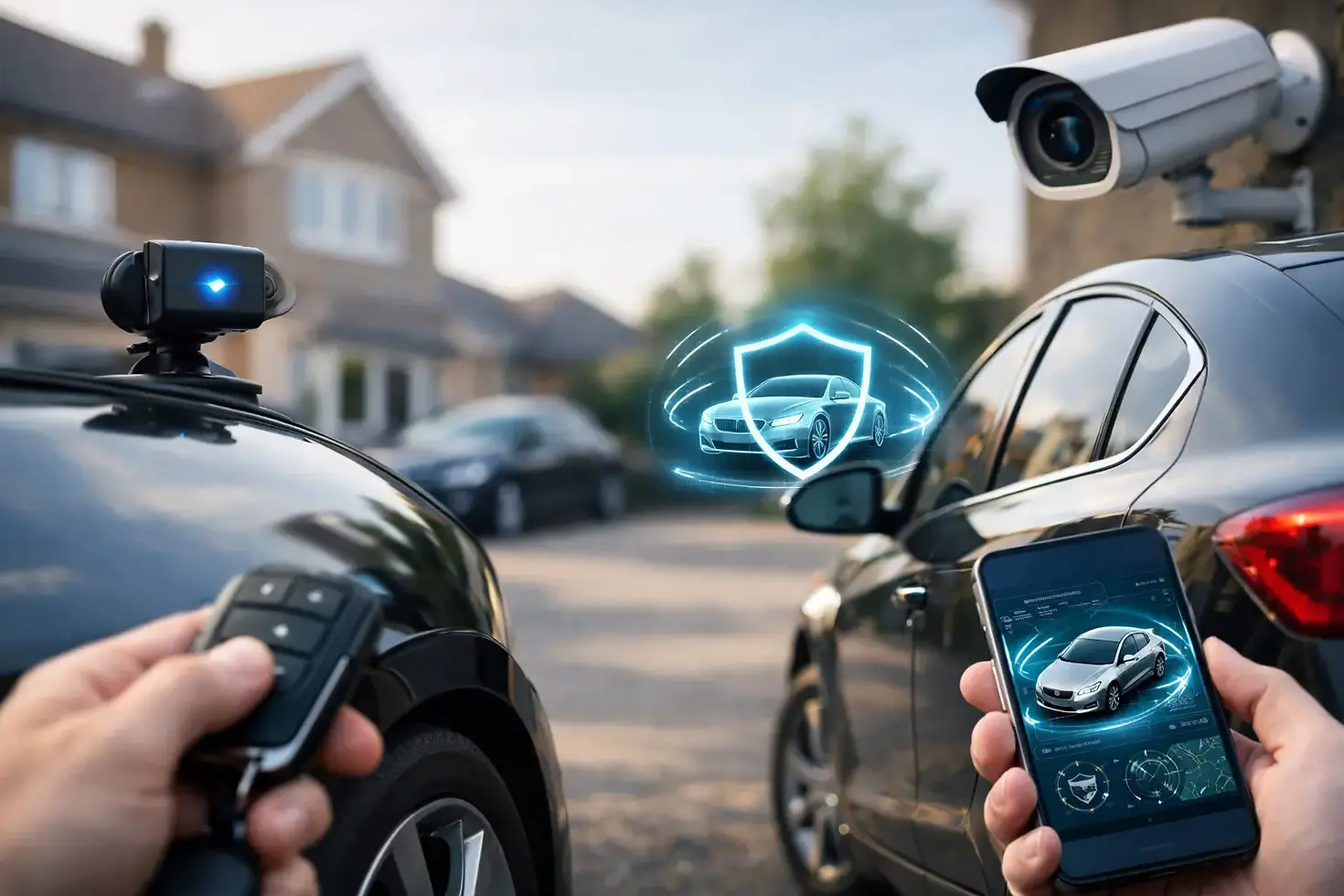
Vehicle Security Technology Trends for UK Owners
A stolen vehicle is rarely taken because one security measure failed. More often, it is because the vehicle had one obvious weak point: an unprotected key signal, an accessible diagnostic port, a vulnerable CAN network or no way to recover it once it had gone. Current vehicle security technology trends are moving away from single-product protection and towards layered systems that delay theft, prevent starting and improve recovery prospects.
For UK owners, that matters across the board. Keyless cars remain a target, high-value vans are routinely attacked for tools and stock, and motorcycles need discreet security that does not compromise everyday use. The right specification depends on the vehicle, where it is kept, its insurance requirements and how it is used. A family SUV parked on a drive needs a different approach from a commercial van left on site overnight.
Vehicle security technology trends: protection in layers
The main shift is towards combining physical security, electronic immobilisation and tracking rather than expecting one device to cover every risk. Each layer addresses a different stage of theft. Physical protection adds time and noise. An immobiliser stops the vehicle being driven away. A tracker gives police and recovery teams a chance of locating it after the event.
This is particularly relevant with modern vehicles. Factory alarms and central locking still have a role, but they are designed around convenience, production cost and broad compliance. They are not always enough against organised theft methods. Criminals can target keyless entry systems, clone or programme keys, exploit diagnostic connections or access vehicle networks through vulnerable components.
A sensible security plan starts with an assessment of the actual threat. A prestige car with keyless entry may need relay-attack protection, an additional CAN bus immobiliser and an insurance-approved tracker. A tradesperson's van may benefit most from external locks, protected load-area access, an alarm and tracking. There is no value in fitting an expensive tracker while leaving easily defeated rear doors as the only barrier to tools.
CAN bus immobilisers are becoming a first-choice upgrade
Digital CAN bus immobilisers have become one of the most effective aftermarket upgrades for modern cars and vans. Rather than relying on a visible switch, additional remote or a basic interrupt wire that thieves may know how to bypass, a properly installed system communicates with the vehicle's electronics and requires a unique driver input before the engine can be started.
The input can be a sequence using existing buttons, such as steering-wheel controls or dashboard switches. There is nothing extra on the keyring and, when correctly configured, nothing obvious to identify from outside the vehicle. This makes the system useful against key cloning, keyless theft and situations where a thief gains entry to the cabin but cannot authorise the vehicle to start.
Installation quality is central here. Modern vehicle wiring and network architecture are not areas for guesswork. The system has to be matched to the specific vehicle, fitted cleanly, tested properly and configured so the owner can operate it without frustration. A good immobiliser should add genuine protection without creating warning lights, battery drain or usability issues.
Traditional additional immobilisers still have a place, particularly on older vehicles, specialist builds and motorcycles. The best choice depends on the electrical system and the theft method most likely to be used. Digital products are not automatically the answer for every vehicle, but they are now a major part of the security conversation.
Keyless theft requires a practical response
Keyless entry is convenient, but it can expose owners to relay theft where criminals extend the signal from a key inside the house to the vehicle outside. Keeping keys in a signal-blocking pouch or box is a simple first measure. It is also worth checking whether the vehicle allows passive entry to be disabled or its key to be put into sleep mode.
Those measures reduce exposure, but they do not replace an immobiliser. If a thief succeeds in relaying the signal or gains access by another method, an additional authorisation step can stop the vehicle being driven away. For higher-risk vehicles, this combination is far more useful than relying on key storage alone.
Tracking is about recovery, insurance and response time
Tracking technology continues to develop beyond basic location reporting. Insurance-approved systems can provide monitored movement alerts, towing alerts, battery-disconnection notification and recovery support. Some systems use GPS alongside additional location technologies, improving the chance of locating a vehicle when it is hidden in a garage, shipping container or underground area.
The right tracker category often comes down to the vehicle and insurer. Cars in higher insurance groups, prestige models and vehicles with a history of theft may require a specific approved tracker. Owners should confirm the wording of their policy before choosing a system, rather than assuming any tracker will qualify.
For fleets and trade vehicles, tracking also has an operational benefit. Location visibility, journey records and unauthorised-movement alerts can help a business respond quickly when a van is moved outside working hours. However, a tracking system should not be treated as permission to leave a vehicle poorly secured. Recovery is never guaranteed, and every hour after theft matters.
A discreet installation is essential. Trackers need to be positioned carefully and professionally, with consideration given to signal performance, power supply and concealment. The best hardware is only as effective as the fitting and monitoring behind it.
Van security is focusing on load-area protection
Van theft is not limited to vehicle theft. For many operators, stolen tools, stock and equipment are the more immediate cost. This has increased demand for physical upgrades that make side and rear doors harder to force or peel open.
High-quality van locks are still one of the strongest deterrents because they are visible, mechanical and difficult to defeat quickly. Slamlocks are useful for couriers and multi-drop work, where the driver needs the load area to lock automatically on closing. Hook locks provide an additional mechanical barrier and are often suited to vans carrying valuable tools. Armour plates and anti-peel measures can protect known weak points around door seams and handles.
The right setup depends on working routine. A plumber making repeated short stops may value automatic locking. A contractor carrying expensive equipment overnight may prioritise additional hook locks, an alarm and a tracker. Physical locks do add an extra step to daily use, but that inconvenience is usually minor compared with the disruption of a break-in.
Smart alerts are useful, but not a substitute for security
App-based alerts, dash cameras with parking modes and connected vehicle notifications are increasingly common. They can notify an owner of impact, movement, door opening or unusual activity. These tools are useful for awareness, particularly when a vehicle is parked away from home or on a job site.
There are limits. A notification may arrive after entry has already been gained, and parking-mode cameras rely on suitable power management to avoid unnecessary battery drain. They are supporting measures, not primary anti-theft systems. For a commercial vehicle, an alert works best alongside locks, an alarm and a properly fitted tracker.
Security installation is becoming more vehicle-specific
The days of fitting the same alarm, tracker or immobiliser to every vehicle are fading. Manufacturers use different network systems, key technologies and module locations. The increasing complexity of hybrid and electric vehicles also means installers need to understand safe wiring practices and vehicle-specific procedures.
This is why product choice should follow inspection, not guesswork. An experienced installer can identify the relevant theft risk, check insurance requirements and recommend a system that suits the vehicle rather than simply fitting the most expensive option. At Quantum Avs, that can mean combining a recognised tracking solution with a CAN immobiliser, or building a van package around locks, alarm coverage and load-area protection.
Owners should also think beyond the initial fitting. Security systems need clear handover instructions, PIN or app details stored safely, and a plan for ownership changes or vehicle sale. A system that nobody knows how to use correctly can become an inconvenience rather than an asset.
The practical next step is to look at your vehicle as a thief would: how it is accessed, how it is started, what is stored inside and how quickly anyone would know it had moved. That assessment will usually point to a security package that is stronger, more sensible and better value than fitting one product in isolation.


Comments