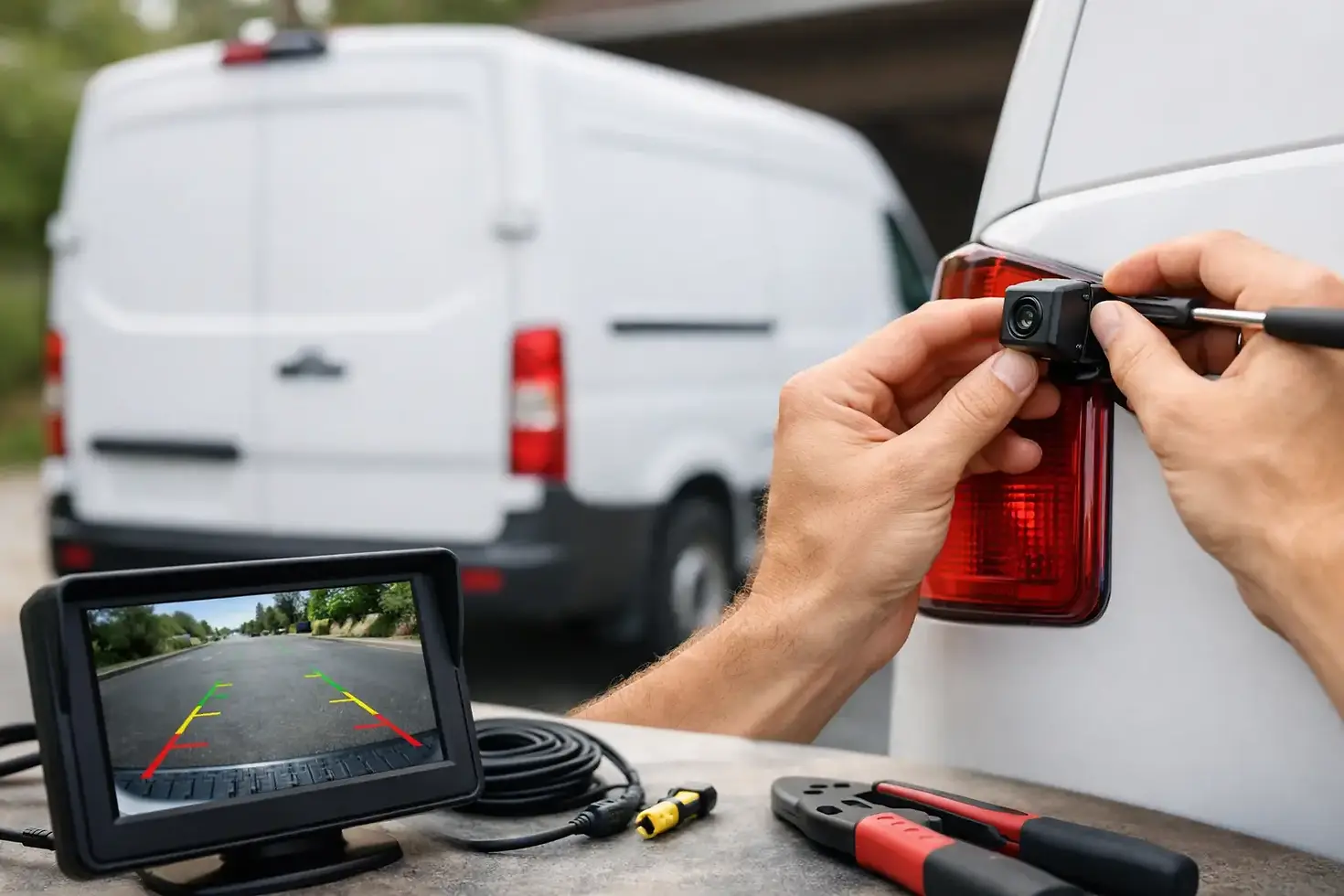
Reverse Camera Installation for Van Owners
A van with no rear view is fine right up until you are backing towards a low bollard, a crowded loading bay or somebody’s front wall. That is why reverse camera installation for van owners is less of a luxury upgrade and more of a practical safety improvement. On commercial vehicles especially, rear visibility is poor by design, and mirrors only tell part of the story.
A properly fitted reverse camera makes day-to-day driving easier, but the quality of the result depends heavily on how it is installed. The camera itself matters, of course, but so do the mounting position, cable routing, screen integration, trigger setup and weather protection. On a van, these details are the difference between a system that works every time and one that becomes unreliable after a wet winter.
Why reverse camera installation for van use needs proper planning
Installing a camera on a hatchback is one thing. A van is different. You are usually dealing with taller bodywork, solid rear doors, longer cable runs and harder working electrical systems. If the vehicle is used for deliveries, tools or trade work, downtime is a nuisance. If it is part of a fleet, reliability matters even more.
The first question is not simply, do you want a camera. It is, what do you need the camera to do. Some van owners only want assistance when reversing into driveways or parking spaces. Others need a wider view for yard manoeuvres, trailer alignment or busy urban drops. A builder’s Transit, a camper conversion and a fleet of panel vans may all need different camera layouts.
That is why we usually recommend starting with vehicle use rather than product price. A cheaper camera installed in the wrong position can be less useful than a well-specified unit matched properly to the vehicle.
Choosing the right reverse camera for a van
There is no single best camera for every van. The right option depends on body shape, door configuration and how the driver uses the vehicle.
A high-level brake light replacement camera is often a clean solution on popular vans because it keeps the installation tidy and factory-looking. It also gives a good angle from above, which helps with general reversing. The trade-off is that very high mounting points can make distance judgement near the bumper feel slightly less natural until you are used to it.
A surface-mounted camera above the rear doors or near the roofline can give an excellent field of view, particularly on larger vans. This works well where maximum visibility matters more than OEM appearance. It does, however, require careful sealing and secure mounting. On a working van, any external fitting needs to cope with vibration, washing and poor weather.
Bumper-level cameras can help with close obstacle judgement, but they are more exposed to road dirt and impact. For many commercial users, that makes them less practical unless there is a very specific need.
Screen choice matters as well. Some installations use a dedicated monitor. Others integrate into an aftermarket head unit with Apple CarPlay or Android Auto. If the van already has a suitable screen, using it often makes sense. If not, a separate display can still be the right answer, especially in trade vehicles where function matters more than cosmetics.
What a proper installation actually involves
A lot of poor reverse camera jobs look acceptable on day one. Problems show up later. Water ingress, image drop-out, electrical interference and unreliable triggering are common when corners are cut.
The camera needs to be mounted squarely and securely, with the right view of the rear area. That sounds obvious, but vans vary. Twin rear doors, barn doors, roof racks, tow bars and step bumpers all affect placement. A camera mounted too high, too low or off-centre can leave blind spots exactly where you need visibility.
Cable routing is one of the biggest parts of the job. On a van, this usually means a long run from the rear to the front, often through factory grommets, door looms and trim sections. It must be protected from chafing, moisture and movement. Hanging a cable through an unsupported route might save time initially, but it will not hold up well on a commercial vehicle.
Power supply and trigger wiring also need to be done correctly. Some systems are wired to activate only when reverse gear is selected. Others can be manually viewed at any time, which is useful on longer vans or vehicles towing equipment. Depending on the vehicle, using the reverse light feed alone may not be the best method. Modern vans with multiplexed or CAN bus electrical systems often need a more considered approach to avoid faults or unstable operation.
Image quality is not just about camera resolution either. Poor earthing, bad connections and cheap video interfaces can all reduce performance. A sharp image in daylight is no use if it flickers, washes out at night or cuts in and out when the doors are slammed.
Factory-style fit versus universal kit
This is where expectations need to be realistic. Universal kits have their place, but not every kit suits every vehicle, and not every customer wants the same finish.
A factory-style install usually means a neater camera position, hidden wiring and cleaner screen integration. It tends to suit newer vans and owners who want the system to feel built-in rather than added on later. It can also be the better route for resale value and daily usability.
Universal systems can still work very well if selected properly. They are often useful on older vans, specialist conversions or vehicles where there is no dedicated model-specific option. The key is fitting them properly, not simply attaching a generic camera and hoping for the best.
The cheapest route is rarely the best value. If a poor kit fails, fogs internally or gives an unusable image, you end up paying twice.
Common mistakes with reverse camera installation for van conversions and work vans
The most common mistake is treating all vans the same. A short-wheelbase van used occasionally for weekends away has different demands from a high-roof trade van reversing daily into tight sites.
Another frequent issue is poor sealing around the camera mount or cable entry point. Water gets in, corrosion follows, and faults appear later. This is particularly common on rear door installations where movement and exposure are constant.
Bad screen placement is another avoidable problem. If the driver has to look too far away from their normal line of sight, the camera becomes less useful. A screen should be easy to glance at, not something that distracts from the manoeuvre itself.
Then there is the assumption that a camera replaces sensors or mirrors. It does not. It adds visibility, but it is still one part of a proper reversing setup. On many vans, a combined camera and parking sensor system gives the most useful result, especially where low obstacles or awkward site conditions are common.
When extra features are worth having
Guidelines on the screen can be helpful, but only if they are set up sensibly. Generic fixed lines are not always accurate for every vehicle length or camera angle. Some drivers like them, others ignore them. It depends on experience and the type of manoeuvring involved.
Low-light performance is worth paying attention to. Many vans are used early in the morning, late in the evening or through winter conditions. A camera that performs well in daylight but struggles in poor light is a compromise you will notice quickly.
If the vehicle tows, a camera that helps with hitch alignment can save time and frustration. If the van is long, keeping the camera view available while driving at low speed can also be useful in some situations. These are not gimmicks when the vehicle’s job actually demands them.
Why professional fitting matters on modern vans
Modern vehicle electrics are not forgiving of guesswork. Add in CAN bus systems, existing infotainment, parking aids, trackers or security equipment, and a reverse camera installation has to be done with some understanding of the whole vehicle. This is especially true where customers are already investing in practical upgrades such as sensors, tow bars, immobilisers or lighting.
A specialist installer will look at how the camera works with the van, not just whether it powers on. That includes compatibility, positioning, cable protection and long-term reliability. It also means being honest when a customer’s first idea is not the best option.
At Quantum AVS, that is usually the real difference between a basic fit and a proper one. The aim is not to add another accessory for the sake of it. The aim is to give the driver a system that is useful every day, survives hard use and suits the vehicle properly.
If you use your van regularly, a reverse camera is one of the upgrades you notice straight away. Get the specification and fitting right, and reversing becomes less of a gamble and more of a routine job done properly.


Comments